
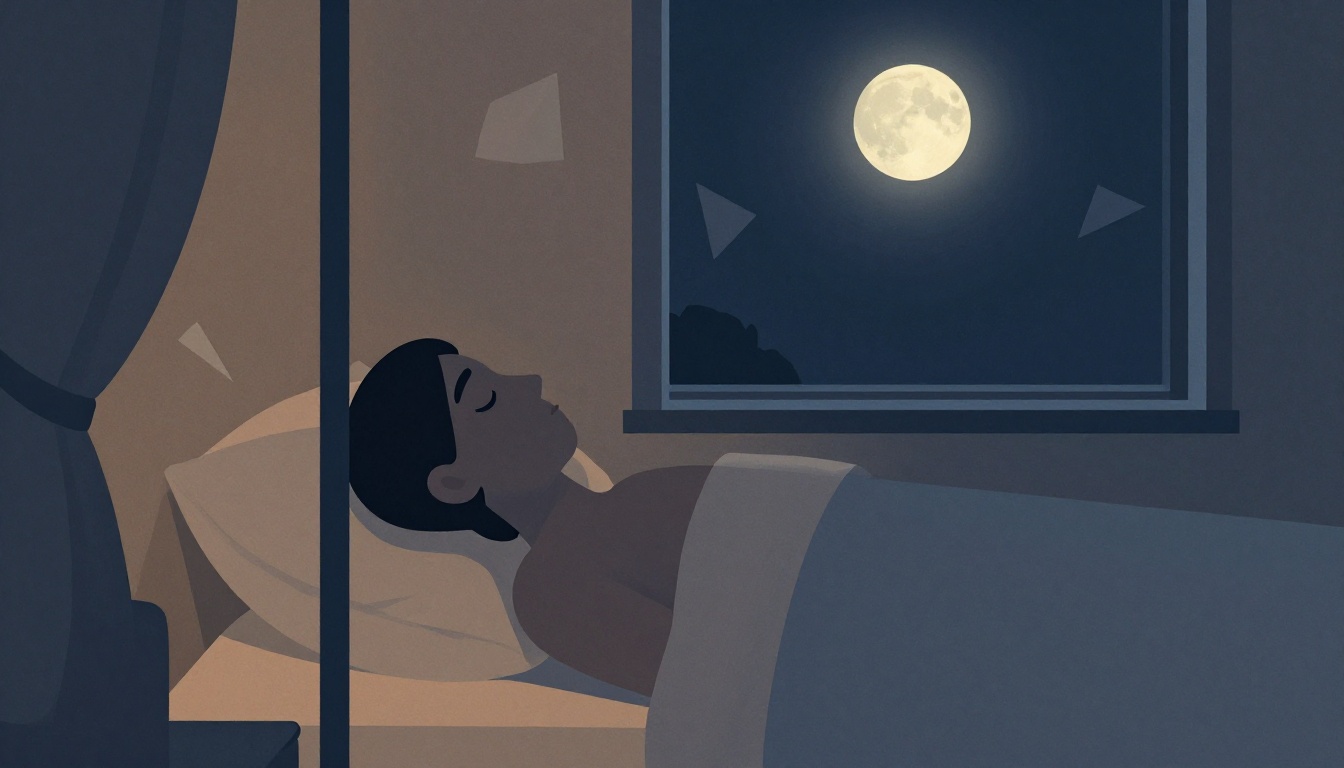
If you are recovering from trauma, you may have noticed that your sleep feels broken, shallow, or haunted by nightmares. This is not a sign that you are failing at recovery. Research shows that sleep disturbance is a strong predictor of PTSD severity and overall mental health decline (UCF RESTORES). Understanding why this happens—and what you can do about it—can help you break the cycle.
What happens to REM sleep in PTSD that interferes with trauma recovery?
Select one answer.
How trauma hijacks your sleep
Trauma does not just affect what you think about during the day. It changes how your brain operates at night. Approximately 58% of trauma survivors report sleep disturbances within 24 hours following a traumatic event, and about 35% experience nightmares (PMC). These numbers are not random. They reflect a biological process: your brain is trying to process the traumatic memory during sleep, but the system gets stuck.
During rapid eye movement (REM) sleep, the brain normally processes emotional information and reduces the emotional charge of memories (Mind Brain Body Lab). In PTSD, this process goes awry. The brain fails to inhibit emotionally charged fear memories, causing them to be replayed night after night (Virginia Tech News).
The REM sleep paradox
REM sleep is sometimes called "paradoxical sleep" because the brain is nearly as active as when you are awake. For trauma survivors, this heightened activity can become a liability. Instead of calming the emotional memory, the brain consolidates it further. Researchers have proposed that REM sleep fragmentation and night-time arousal interact to modulate how emotional memories are stored (Frontiers in Psychology).
This means that if your sleep is fragmented—waking up multiple times, struggling to fall back asleep—your brain may not get the uninterrupted REM cycles it needs to properly process the traumatic memory. The result is a loop: poor sleep worsens trauma symptoms, and trauma symptoms worsen sleep.
Practical steps to protect your sleep during recovery
You do not need to fix everything at once. Small, consistent changes can help your nervous system feel safe enough to rest.
1. Stabilize your bedtime and wake time
Your body’s internal clock (circadian rhythm) relies on consistency. Going to bed and waking up at the same time every day—even on weekends—helps regulate cortisol and melatonin production. Aim for a window of no more than one hour variation.
2. Create a wind-down routine that signals safety
Trauma survivors often have a hypervigilant nervous system that stays on alert at night. A predictable, calming pre-sleep routine can help. Try:
- Dimming lights 60–90 minutes before bed
- Avoiding screens (blue light suppresses melatonin)
- Gentle stretching or progressive muscle relaxation
- Listening to calming music or nature sounds
3. Address nightmares directly
Nightmares are not just distressing—they actively disrupt REM sleep. If you experience frequent nightmares, consider talking to a professional about treatments such as imagery rehearsal therapy (IRT) or, in some cases, medication like prazosin, which has been shown to reduce PTSD nightmares and insomnia (Sleep Health Foundation).
4. Avoid alcohol and caffeine close to bedtime
Alcohol may help you fall asleep initially, but it fragments REM sleep later in the night. Caffeine can stay in your system for 6–8 hours. Both interfere with the deep, restorative sleep your brain needs for emotional processing.
5. Use grounding techniques if you wake in panic
If you wake up with a racing heart or intrusive thoughts, try a simple grounding exercise: name five things you can see, four you can touch, three you can hear, two you can smell, and one you can taste. This can help your nervous system shift out of fight-or-flight mode.
When to seek professional support
If sleep disruption persists for more than a few weeks or significantly affects your daily functioning, it may be time to work with a trauma-informed professional. Sleep disturbances are not just a symptom of PTSD—they can actively maintain and worsen the condition (ISTSS). Addressing sleep directly can improve the effectiveness of trauma therapy.
Quiz: Test your understanding
Based on the research cited in this article, which of the following is true about REM sleep and trauma?
How the Resident Expert Can Help
Kelly Pienaar offers online counseling, coaching, and wellness services focused on nervous system regulation and trauma recovery. Her practice is designed for individuals navigating complex trauma, narcissistic abuse, and ADHD, helping them move from chronic overwhelm to self-trust. If you are struggling with sleep disruption as part of your trauma recovery, working with a body-aware, trauma-informed professional can make a meaningful difference. Visit Kelly Pienaar Counselling to learn more.