
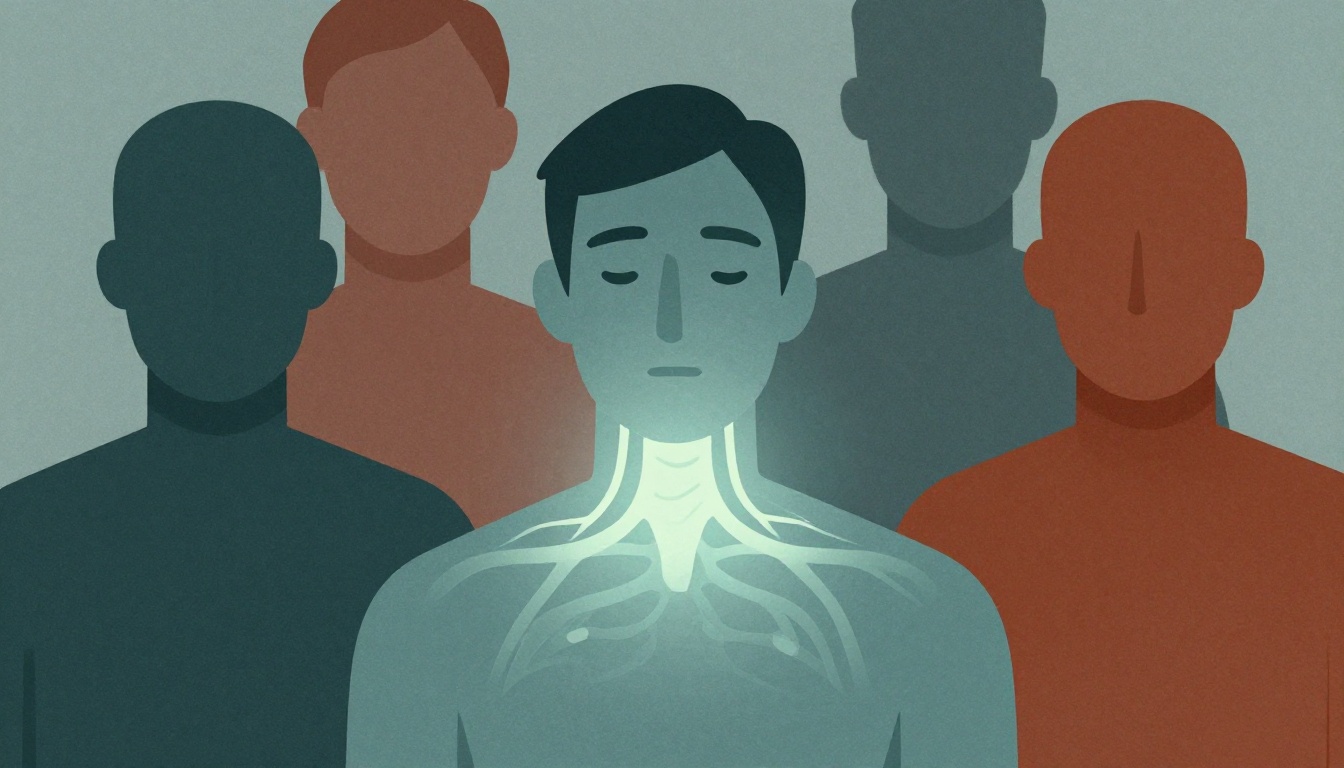
If you've tried stretching, new pillows, and massage for your neck pain but the tension keeps returning, the root cause may not be physical. Research increasingly shows that unresolved trauma can keep your nervous system locked in a stress response, and the neck is one of the first places this chronic tension shows up.
What is one reason chronic neck pain often returns despite stretching and massage?
Select one answer.
How trauma gets stored in your neck
When you experience a traumatic event, your nervous system activates the fight, flight, or freeze response. Muscles tense, breathing quickens, and the body prioritizes survival. Normally, this state resolves once the threat passes. But with unresolved trauma, the nervous system can stay stuck in that heightened alert mode, even years later source.
This chronic sympathetic dominance keeps muscles in a state of guarded tension. The neck and shoulders are especially vulnerable because they house the brainstem and are packed with proprioceptors that constantly signal the brain about posture and movement. When the nervous system is dysregulated, these signals become distorted, reinforcing pain cycles source.
Common physical symptoms of nervous system dysregulation include chronic headaches, neck pain, jaw tension, and sleep disturbances source.
The fascia connection
Trauma is often stored in the fascia, the connective tissue network surrounding muscles and organs. Some experts suggest that unresolved trauma leads to increased tension in the fascia, potentially contributing to chronic pain source. This can create a feedback loop where the brain interprets normal sensations as painful, and the body sends stronger pain signals back, reinforcing the cycle.
Practical steps to release trauma-related neck tension
Healing trauma stored in the neck requires addressing the nervous system, not just the muscles. Here are actionable approaches:
1. Somatic exercises
Somatic exercises are gentle movements that connect your physical body and nervous system. They help release chronic muscle tension through a process called pandiculation — consciously contracting a muscle, holding briefly, then slowly releasing. This retrains the nervous system to let go of habitual bracing patterns source.
Try this simple neck rock exercise: lie on your back with knees bent. Slowly and gently rock your head from side to side, noticing any areas of resistance. Breathe into the tight spots and allow the movement to be small and easy. Do this for 2–3 minutes daily.
2. Progressive muscle relaxation
Tense and then relax different muscle groups, starting from your feet and working up to your neck and face. Hold each tension for 3–5 seconds, then exhale and let go completely. This helps the nervous system shift from sympathetic (stress) to parasympathetic (rest and digest) mode.
3. Mindful breathing with visualization
Sit or lie comfortably. Inhale deeply through your nose, imagining the breath expanding your chest and filling your lungs. As you exhale, visualize tension leaving your body as a color (like grey or black air) exiting with your breath. This can calm the nervous system and reduce muscle guarding.
4. Work with a trauma-informed practitioner
Because neck tension from trauma is rooted in the nervous system, working with a professional who understands somatic approaches can be transformative. A body-aware therapist can help you safely release stored tension without retraumatization.
Quiz: Test your understanding
What is one reason chronic neck pain often returns despite stretching and massage?
- The neck muscles are inherently weak and need more exercise
- The nervous system remains stuck in a stress response, keeping muscles guarded
- Neck pain is always caused by poor pillow choice
Correct answer: The nervous system remains stuck in a stress response, keeping muscles guarded.
How the Featured Expert Can Help
Kelly Pienaar offers online counseling, coaching, and wellness services focused on nervous system regulation and trauma recovery. Her practice is designed for individuals navigating complex trauma, narcissistic abuse, and ADHD, helping them move from chronic overwhelm to self-trust. She integrates body-aware, trauma-informed methodologies to address the root causes of physical tension. Visit Kelly Pienaar Counselling to learn more.