
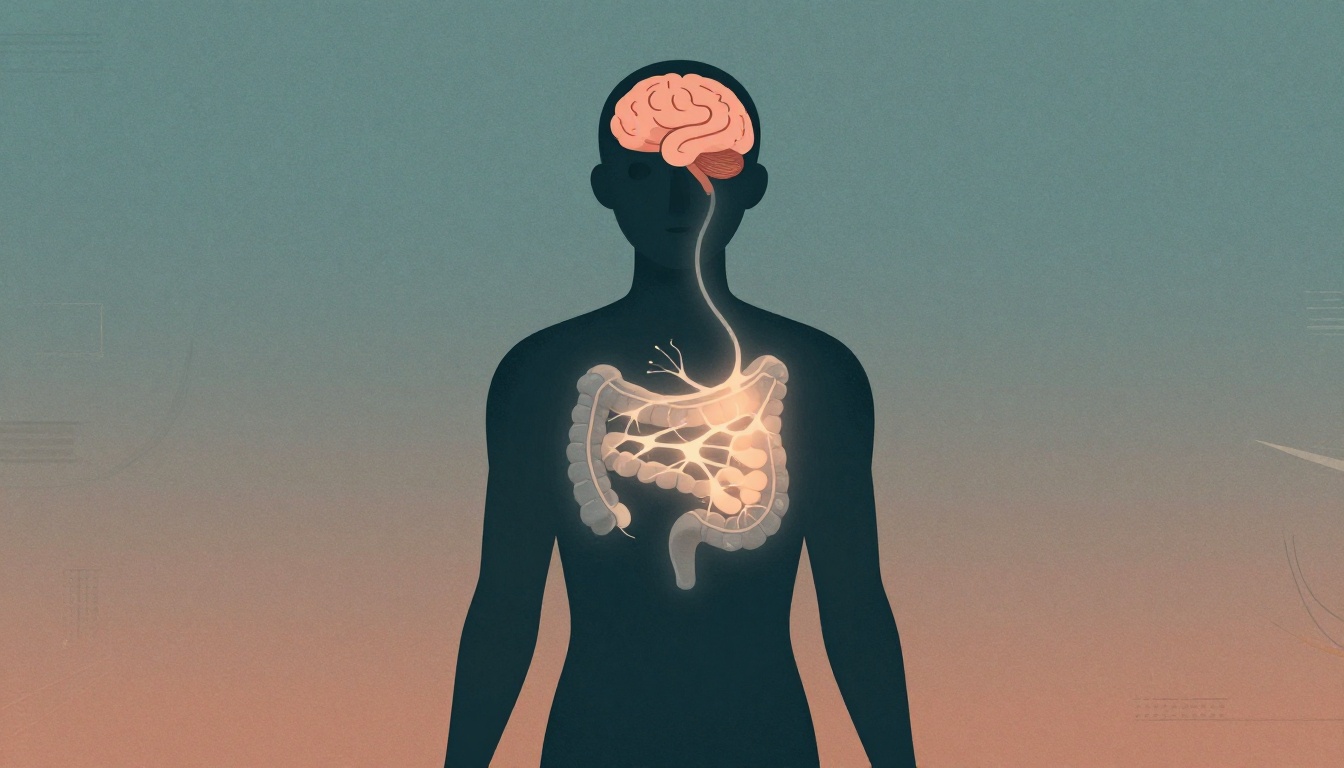
If you've been told your chronic bloating, IBS, or stomach pain is 'just stress', you may be right — but not in the way you think. Emerging research shows that trauma memories can be stored directly in your digestive system, independent of your brain. This isn't a metaphor. Your gut has its own nervous system, and it can learn, remember, and react to threat long after a traumatic event is over.
What is the enteric nervous system sometimes called?
Select one answer.
The enteric nervous system: your second brain
Your gastrointestinal tract is lined with a complex network of neurons called the enteric nervous system (ENS). It contains between 200 and 600 million neurons — more than the spinal cord — and operates largely autonomously from your brain. The Queensland Brain Institute describes the ENS as 'the brain in the gut' because it controls digestion, blood flow, and immune interactions without conscious input. This system communicates with your central nervous system through the vagus nerve, forming the gut-brain axis.
How trauma gets stored in your gut
When you experience a traumatic event, your body's stress response activates. But the memory of that event isn't only encoded in your hippocampus and amygdala. A 2024 review in Frontiers in Psychiatry found that stress-induced implicit memories may persist throughout life via epigenetic processes in the enteric nervous system, independent of the central nervous system. In other words, your gut can 'remember' trauma on its own.
Research led by Dr. Michael Schemann and published in Frontiers in Neuroscience (2019) suggests that the ENS stores the memory that initiates motor disorder after a centrally acting stressor. This means that after a traumatic event, your gut may continue to produce abnormal motility, pain, or inflammation even when your conscious mind has processed the experience.
The gut-brain axis and PTSD
A 2026 study in PMC concluded that the gut-brain axis represents a promising framework for understanding the pathophysiology of PTSD and related conditions. The bidirectional communication means that gut dysfunction can worsen anxiety and hypervigilance, while trauma-driven stress alters the gut microbiome and increases intestinal permeability — sometimes called 'leaky gut'. This creates a vicious cycle where trauma and digestive symptoms reinforce each other.
Signs your gut may be holding trauma
- Unexplained IBS, bloating, or nausea that flares during emotional triggers
- Digestive symptoms that don't respond to diet changes or medication
- A 'gut feeling' of danger in safe situations
- Chronic constipation or diarrhea linked to stress
- Sensitivity to foods that never bothered you before trauma
What you can do about it
Healing trauma stored in the gut requires a body-aware approach, not just talk therapy. Here are actionable steps:
- Vagus nerve stimulation — Slow, deep breathing (6 breaths per minute), humming, or cold exposure can activate the vagus nerve and calm the gut-brain axis.
- Somatic practices — Gentle movement, yoga, or body scans help you reconnect with gut sensations without judgment.
- Trauma-informed nutrition — Work with a professional who understands the gut-brain connection. Avoid extreme elimination diets that add stress.
- Nervous system regulation — Practices like grounding, orienting, and pendulation help shift your system out of survival mode.
- Professional support — Seek a practitioner trained in somatic trauma therapy, nervous system regulation, or trauma-informed care.
Quiz: Test your understanding
What is the enteric nervous system sometimes called?
- A) The autonomic brain
- B) The second brain
- C) The gut microbiome
Correct answer: B) The second brain
How the Featured Expert Can Help
Kelly Pienaar offers online counseling, coaching, and wellness services focused on nervous system regulation and trauma recovery. Her body-aware approach helps clients move from chronic overwhelm to self-trust, addressing trauma stored in the body — including the gut. Visit Kelly Pienaar Counselling to learn more.