
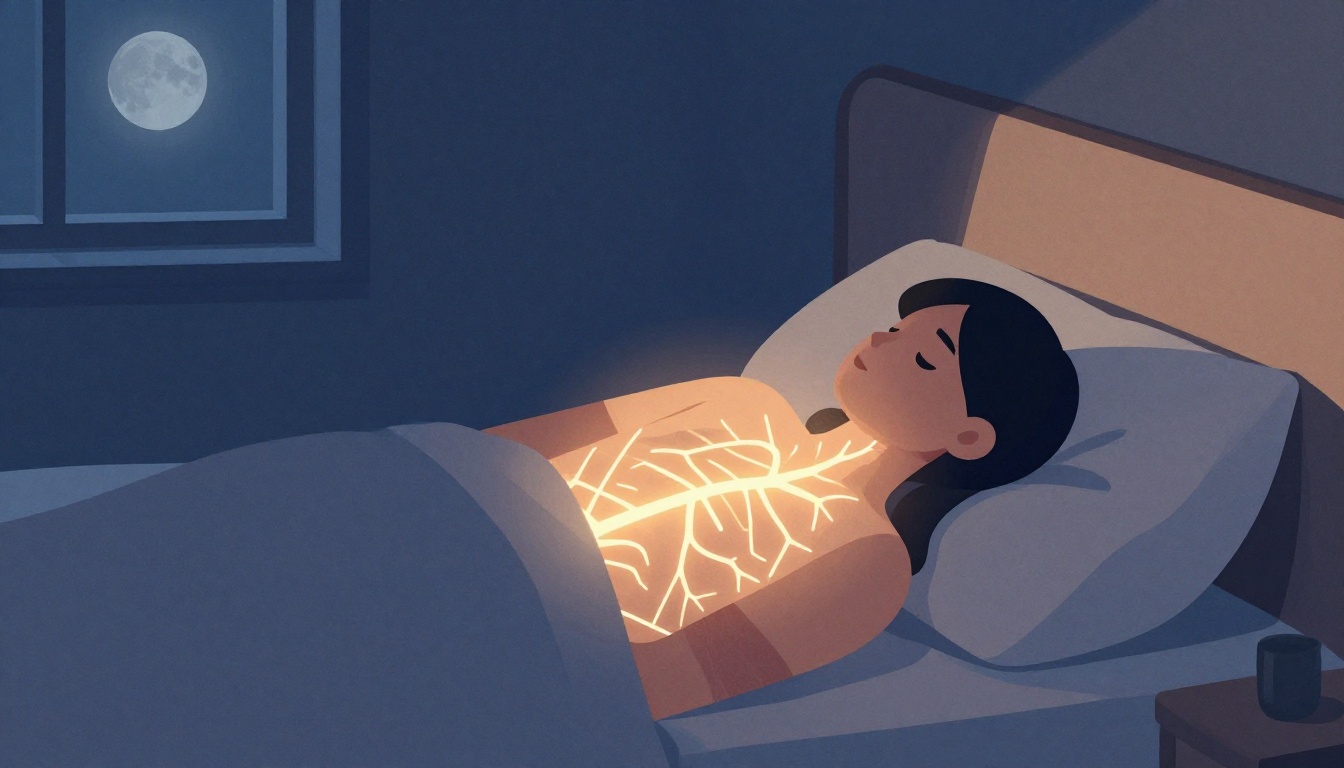
If you've ever lain awake at 2 a.m. with your heart pounding, ears straining for sounds that aren't there, you know that trauma doesn't clock out when the lights go off. Sleep disturbances are among the most persistent and debilitating symptoms of post-traumatic stress disorder (PTSD), affecting up to 90% of those diagnosed. But this isn't a personal failure—it's your nervous system doing exactly what it was trained to do: keep you safe. The problem is that the threat has passed, yet your body still acts as if it's present.
Which of the following is a key characteristic of hyperarousal that contributes to sleep disturbances?
Select one answer.
The science of the night shift
Trauma changes how your nervous system operates. When you experience something overwhelming, your sympathetic nervous system—the part responsible for fight-or-flight—can get stuck in the "on" position. This state, called hyperarousal, is characterized by sleep disturbances, muscle tension, and a lower threshold for startle responses. Instead of winding down as darkness falls, your body remains primed for danger, scanning for threats that no longer exist.
This hypervigilance doesn't just make it hard to fall asleep; it also fragments the sleep you do get. Disordered rapid eye movement (REM) sleep—the stage where emotional memories are processed—can disrupt synaptic plasticity, reinforcing intrusive recollections and hypervigilance. In other words, poor sleep makes trauma symptoms worse, and heightened trauma responses further degrade sleep quality. It's a self-perpetuating cycle that can leave you exhausted and on edge.
Why your brain won't let go
During sleep, your brain normally consolidates emotional memories and helps you learn to extinguish conditioned fear—the process by which a reminder of trauma loses its power to trigger a stress response. But in PTSD, this process is impaired. Research shows that trauma-exposed individuals with sleep disturbances have a harder time learning and remembering extinction of conditioned fear. This means that a sound, smell, or place that reminds you of the trauma can keep triggering your alarm system, even when you know you're safe.
Underlying this are dysregulations in the hypothalamic–pituitary–adrenal (HPA) axis, sympathetic hyperarousal, and alterations in limbic and prefrontal circuitry. These are not just abstract concepts; they translate into the physical sensations you feel at night—racing heart, shallow breathing, and a body that refuses to relax.
Practical steps to calm your nervous system at night
While you can't simply "turn off" a hypervigilant nervous system, you can create conditions that help it settle. Here are actionable steps to try:
- Create a wind-down ritual: Spend 30–60 minutes before bed doing something calming and repetitive, like gentle stretching, slow breathing, or listening to quiet music. This signals to your nervous system that the day is over.
- Use grounding techniques: If you wake up feeling panicked, try the 5-4-3-2-1 method—name 5 things you can see, 4 you can touch, 3 you can hear, 2 you can smell, and 1 you can taste. This pulls your attention away from internal alarms and into the present moment.
- Reduce sensory input: Sensory sensitivity—discomfort from light or noise—is common after trauma and is linked to sleep disturbances. Consider blackout curtains, a white noise machine, or earplugs to minimize unexpected stimuli.
- Practice progressive muscle relaxation: Tense and then relax each muscle group, starting from your toes and moving upward. This can help release the physical tension that hyperarousal creates.
- Avoid caffeine and alcohol in the evening: Both can disrupt sleep architecture and exacerbate nighttime awakenings.
When to seek support
If sleep disturbances persist and interfere with your daily life, it may be time to seek professional help. Trauma-informed therapy that focuses on nervous system regulation can help you move from survival mode to a state of stability. Approaches like somatic experiencing, EMDR, and other body-aware modalities are designed to address the physiological roots of hyperarousal.
Remember, your body's nighttime vigilance is not a sign of weakness—it's a survival strategy that has outlived its usefulness. With the right support, you can teach your nervous system that nighttime is safe.
Quiz: Test your understanding
Which of the following is a key characteristic of hyperarousal that contributes to sleep disturbances?
- A) A lowered threshold for startle responses
- B) A complete shutdown of the stress response
- C) An increase in REM sleep duration
Correct answer: A) A lowered threshold for startle responses. Hyperarousal is marked by an overactive fight-or-flight response, leading to easy startling and difficulty relaxing.
How the Featured Expert Can Help
Kelly Pienaar offers online counseling, coaching, and wellness services focused on nervous system regulation and trauma recovery. Her practice is designed for individuals navigating complex trauma, narcissistic abuse, and ADHD, helping them move from chronic overwhelm to self-trust. By integrating lived experience with structured support, she creates a safe space for clients to reconnect with their bodies. If you're ready to find steadier ground, visit Kelly Pienaar Counselling to learn more.