
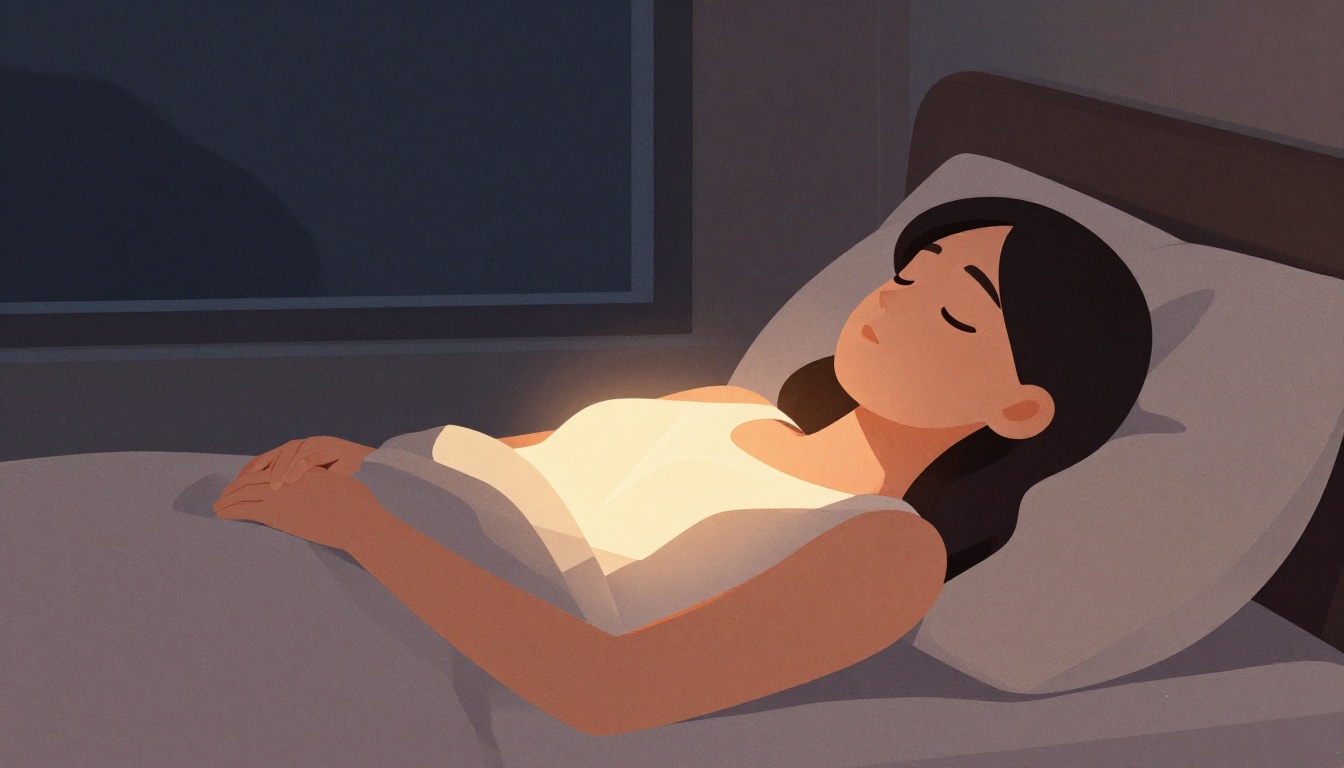
During which sleep stage do nightmares typically occur?
Select one answer.
Why sleep stops feeling safe after trauma
If you fall asleep exhausted and wake up more tired than when you went to bed, you are not imagining it. After a traumatic event, many people have difficulty falling asleep, wake up more often during the night, and have trouble falling back asleep, according to the Sleep Foundation. The problem is not willpower or a bad mattress. It is your nervous system doing exactly what it learned to do: staying ready.
Sleep requires a sense of safety. Trauma removes that sense, so the body treats bedtime as another threat to scan for.
What hyperarousal actually does to your night
The core mechanism is hyperarousal — your stress-response system stays switched on. Research on PTSD describes an underlying hyperarousal that lightens sleep and prevents deeper, more restorative sleep stages (Pace-Schott et al., 2015). In plain terms: you may be asleep, but not deeply enough to recover.
This shows up in recognizable patterns:
- Trouble falling asleep because your mind is still scanning for danger.
- Frequent waking and difficulty settling again.
- Light, non-restorative sleep that leaves you drained.
- More arm and leg movements during sleep, which the National Center for PTSD notes can increase after trauma.
- Night sweats, sleep talking, or acting out dreams.
None of these are character flaws. They are survival responses that never got the signal that the danger passed.
Why the nightmares come back
Nightmares are one of the most distressing trauma symptoms, and they have a specific timing. Nightmares typically occur during the second half of your sleep period, during REM sleep, and you remember them on waking (Cleveland Clinic).
Imaging research found that PTSD was associated with hyperactivation of the brain's fear and arousal system that persisted from wakefulness into deep sleep (MDedge Neurology). In other words, the threat-detection system that should quiet down at night stays loud.
This creates a loop. Instead of resolving the trauma, nightmares can reinforce the emotional intensity and keep the nervous system in a state of hyperarousal (Khiron Clinics). Poor sleep then makes emotional regulation harder the next day, which makes the following night harder too.
Why this matters beyond tiredness
Sleep disturbance is a strong predictor of overall mental health decline and PTSD severity, and sleep plays a critical role in memory consolidation and learning (UCF RESTORES). That last point is practical: because trauma therapy depends on learning new coping strategies, disrupted sleep can reduce how well that therapy works. Treating sleep is not a side issue — it is part of trauma recovery.
A practical checklist for steadier nights
You are not trying to force sleep. You are trying to send your nervous system small, repeated signals of safety.
- Anchor your wake time. Get up at the same time daily, even after a bad night. A stable wake time is the strongest lever for a stable body clock.
- Build a wind-down runway. Give yourself 30–60 minutes of low-light, low-demand time before bed. No problem-solving, no arguments, no doomscrolling.
- Do a body scan, not a thought scan. Lie down and slowly notice your feet, legs, back, and jaw. Let each area soften. This gives your nervous system something concrete to attend to instead of threat-scanning.
- Keep the bed for sleep. If you are wide awake and agitated for more than roughly 20 minutes, get up, sit somewhere dim, and do something dull until sleepy.
- Write down the 2 a.m. list. Keep a notepad by the bed. When your mind starts rehearsing tomorrow, write it down and tell yourself it is handled until morning.
- Cool, dark, quiet. These are basic but they matter more when your arousal system is already elevated.
- Track patterns, not perfection. Note sleep time, wake time, and whether nightmares occurred. Patterns give a therapist something to work with.
- Do not white-knuckle it alone. Persistent insomnia and recurring nightmares are treatable, and they are worth raising with a professional rather than enduring.
When to get support
If sleep problems have lasted more than a few weeks, if nightmares are frequent, or if you dread going to bed, that is a signal to seek help — not a sign you have failed at self-care. Trauma-informed support that works with the nervous system, rather than only talking about the past, can help your body relearn that night is not a threat.
How the Featured Expert Can Help
Kelly Pienaar offers online counselling, coaching, and wellness services focused on nervous system regulation and trauma recovery, aimed at helping clients move from stress and overwhelm to stability and self-trust. Her practice is designed for people navigating complex trauma, narcissistic abuse, and ADHD. You can learn more at kellypienaar.com.
Quick check: what did you learn?
Before you go, test your understanding of one key fact from this article.
Quiz: During which sleep stage do nightmares typically occur?
- A) Deep non-REM sleep in the first half of the night
- B) REM sleep, usually in the second half of the sleep period
- C) The transition from wakefulness to light sleep
Correct answer: B. Nightmares typically occur during the second half of your sleep period, during REM sleep, and you remember them on waking.