
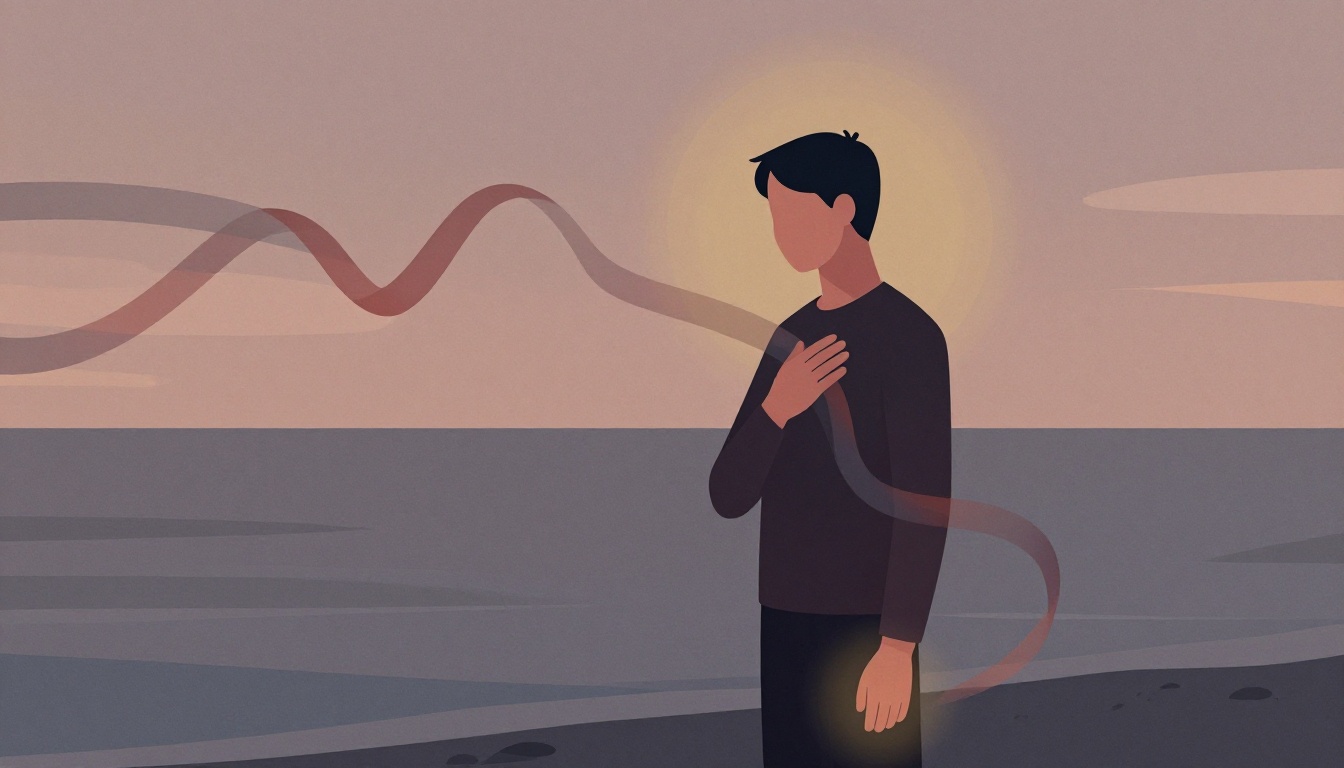
You feel a sudden wave of dread, shame, or panic — but nothing dangerous is happening. There's no image, no clear memory, just a full-body sense that you're small, unsafe, or about to be abandoned. That's an emotional flashback, and it can feel like it comes out of nowhere.
Emotional flashbacks are a hallmark of complex trauma. Unlike the visual flashbacks of PTSD, they don't come with a clear picture or narrative. They're a feeling without a story — a sudden regression into the emotional state of a past overwhelming experience, often from childhood. Because there's no obvious trigger, they're frequently mistaken for anxiety, depression, or mood swings.
The good news: you can learn to catch them earlier and shorten them. This guide explains what's happening in your nervous system and gives you practical steps to interrupt the spiral.
What distinguishes an emotional flashback from a typical memory?
Select one answer.
Why emotional flashbacks take over
Your nervous system has an optimal zone of arousal — sometimes called the window of tolerance — where you can feel emotions without being overwhelmed. Within this window, you can think clearly and stay present.
Trauma narrows that window. When something reminds your body of past danger, your arousal shoots outside the window into one of two states:
- Hyperarousal (fight/flight): anxious, angry, panicky, on edge, overwhelmed.
- Hypoarousal (freeze/shutdown): numb, spaced out, disconnected, frozen.
These shifts aren't failures — they're automatic survival responses. The problem is when trauma keeps your body stuck in these states long after the danger has passed. During an emotional flashback, your nervous system is effectively time-traveling: it's responding to the past as if it's happening now.
Step 1: Name what's happening
The first move is recognition. When a wave of intense emotion hits with no clear cause, try silently labeling it: "This is an emotional flashback. I feel afraid, but I am not in danger right now."
That distinction matters. Naming the experience engages your thinking brain and creates a small gap between the feeling and your reaction. You're not denying the emotion — you're putting it in context.
Step 2: Ground back into the present
Grounding techniques help pull you away from flashbacks and unwanted memories by refocusing your attention on the present moment. They work because they regulate the nervous system by shifting awareness away from overwhelming thoughts and toward your immediate surroundings.
Try these:
- 5-4-3-2-1 technique: Notice 5 things you can see, 4 you can touch, 3 you can hear, 2 you can smell, and 1 you can taste. Aim for small details your mind would usually tune out.
- Physical grounding: Press your feet firmly into the floor. Hold something cold. Press your hands together. Notice the texture of your clothing on your skin.
- Sensory orientation: Look around and name colors, objects, and people. Listen for sounds — traffic, voices, birds. If you're in a dark space, turn on a light.
For dissociation or numbness, sensory grounding — focusing on temperature or texture — can help re-establish presence and awareness.
Step 3: Regulate your body
Grounding orients you; regulation settles you. Simple tools include:
- Controlled breathing: Slow, extended exhales signal safety to your nervous system.
- Movement: Stretching, walking, or slow rocking can discharge trapped activation.
- Reduce sensory overload: Lower extra noise, dim harsh lights, or open a window for fresh air.
These aren't cures — they're tools for managing symptoms in the moment. Practiced regularly, they can prevent stress from building up and improve your overall sense of balance.
Step 4: Build your window over time
Stopping flashbacks isn't only about crisis management. Expanding your window of tolerance involves improving emotion regulation skills, engaging in calm and focused activities, and cultivating a good support system. Over time, this means it takes more stress to push you out of your window.
A few habits that help:
- Track your triggers. You don't need to avoid them — just know them so you're better prepared.
- Practice grounding daily, not only during flashbacks. This builds the skill before you need it.
- Pace yourself. If reading about trauma feels activating, start with grounding and stabilization first, then return when you feel steadier.
When to get professional support
Self-help tools are valuable, but emotional flashbacks often point to unprocessed trauma that benefits from guided work. If flashbacks are frequent, intense, or interfering with daily life, working with a trauma-informed practitioner can help you expand your window of tolerance safely and process what's underneath.
How the Featured Expert Can Help
Kelly Pienaar offers online counselling, coaching, and wellness services focused on nervous system regulation and trauma recovery. Her practice is designed for people navigating complex trauma, narcissistic abuse, and ADHD, helping clients move from chronic overwhelm toward stability and self-trust. You can learn more at kellypienaar.com.
Quiz: Test your understanding
Emotional flashbacks can be confusing because they don't always come with a clear memory. See if you can identify the key fact about what's happening in your nervous system.
What distinguishes an emotional flashback from a typical memory?
- A) It involves vivid visual images of the traumatic event.
- B) It causes your nervous system to react as if the past is happening now.
- C) It only occurs during sleep or nightmares.
(Correct answer: B)