
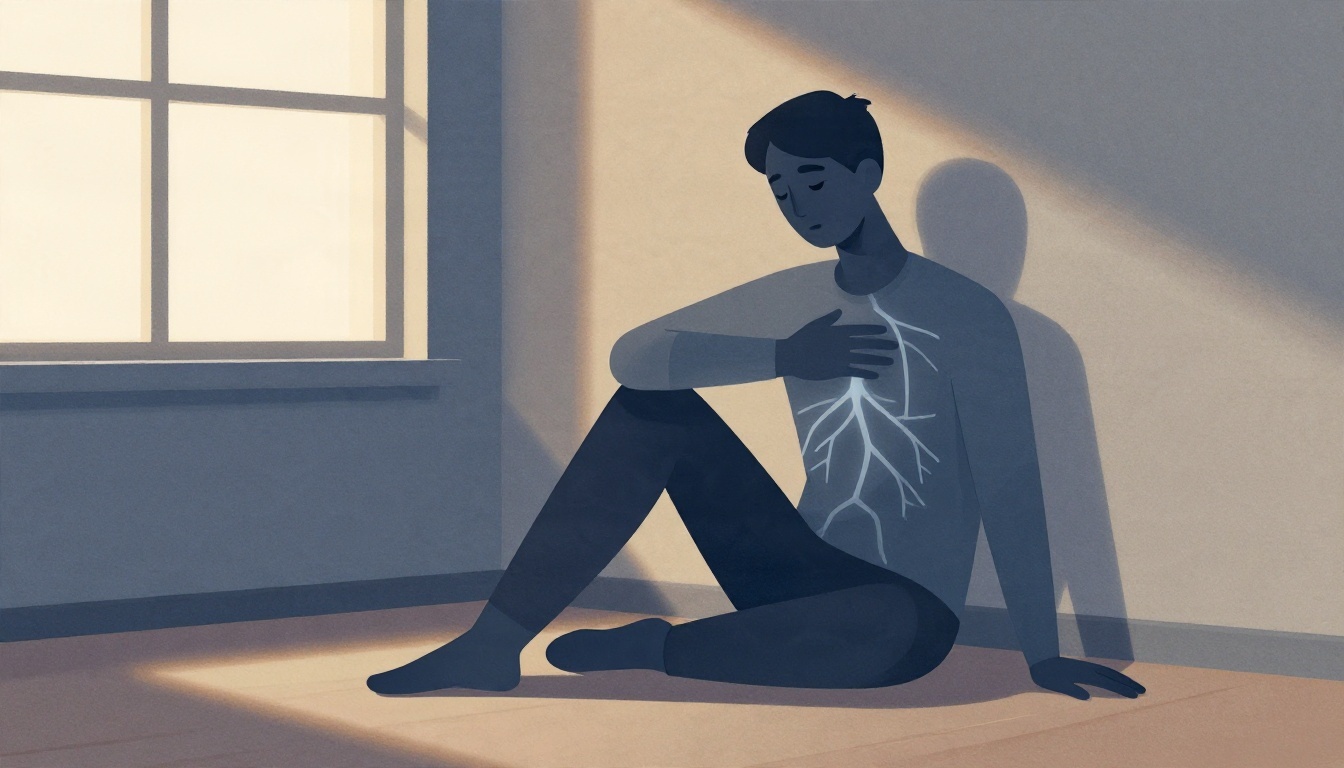
If you can logically know you're safe but your body still braces, scans the room, or shuts down, you're not broken and you're not being dramatic. Trauma changes how the nervous system evaluates safety, so the work isn't to convince yourself with logic — it's to give your body repeated, gentle evidence that the threat has passed.
According to Polyvagal Theory, what does the term neuroception describe?
Select one answer.
Why your body doesn't feel safe yet
Trauma is physiological. It causes long-term dysregulation in the nervous system, which is why you can't simply rationalize or "think your way out of it" (Jazz Psychiatry). After chronic or traumatic stress, the nervous system may not return to its baseline. It stays tuned to excess fight-or-flight, and the vagus nerve is interrupted from bringing you into a calm, connected state.
Two processes explain a lot of this:
- Neuroception — the nervous system's rapid, automatic evaluation of safety and threat, running continuously beneath conscious awareness. Dr. Stephen Porges introduced the term within Polyvagal Theory to describe this subconscious evaluation (INSiGHT).
- Interoception — the body's awareness of its own internal signals. For trauma survivors, neuroception often misreads safe cues as dangerous, especially when early life taught the body that connection was unpredictable or unsafe (Reinventing Hope Counseling).
When the body doesn't feel safe, it won't focus on noticing itself. That's why felt safety has to come first.
What dysregulation actually looks like
A dysregulated nervous system means the stress-response systems stay on high alert (hyperarousal) or shut down (hypoarousal), even when there's no real danger present (Associated Clinic of Psychology). Signs can include:
- Physical: chronic fatigue, headaches or migraines, digestive issues, sleep disturbances.
- Emotional: heightened anxiety, constant worry, hypervigilance, or numbness.
These responses happen below conscious awareness, in the survival brain. Becoming triggered or shutting down isn't something you're choosing — it happens automatically and instantly.
A practical checklist for rebuilding safety
You don't need to do all of this at once. Pick one or two and repeat them daily. Repetition is what teaches the nervous system.
- Orient to the room first. Slowly look around and let your eyes rest on neutral objects. This gives neuroception fresh evidence about the present environment.
- Use grounding through the five senses. Name what you can see, hear, and feel. Sensory awareness helps the body remember what safety feels like.
- Try diaphragmatic breathing. Slow, belly-based breathing is one of the most accessible ways to signal calm to the nervous system.
- Add gentle rhythmic movement. Walking, swaying, or rocking gives the body a predictable rhythm it can settle into.
- Release held tension. Notice where you feel stress in your body, then release it by shaking or relaxing your muscles — a core Somatic Experiencing technique (ACP).
- Use temperature and sound. Cool air, a warm drink, or humming can shift autonomic state without requiring much effort.
- Schedule true rest. Rest isn't a reward; it's part of how the nervous system recalibrates.
When self-help isn't enough
Grounding, breathwork, gentle movement, and sensory awareness all help your body remember what safety feels like. But if you're stuck in survival mode, structured support can make the difference. Therapy tools such as somatic therapy, EMDR, and polyvagal-informed therapy focus specifically on helping the nervous system recover (Baylor Scott & White).
Neuroplasticity allows the nervous system to relearn safety. When the survival brain is allowed to process what happened and recover, default strategies don't get cued again and again — and returning to a regulated baseline changes how you think, feel, and act.
How the Featured Expert Can Help
Kelly Pienaar offers online counselling, coaching, and wellness services focused on nervous system regulation and trauma recovery. Her practice is designed for people navigating complex trauma, narcissistic abuse, and ADHD, helping them move from chronic overwhelm toward stability and self-trust. You can learn more at kellypienaar.com.
Quick quiz
Before you go, test your understanding of one key idea from this article.