
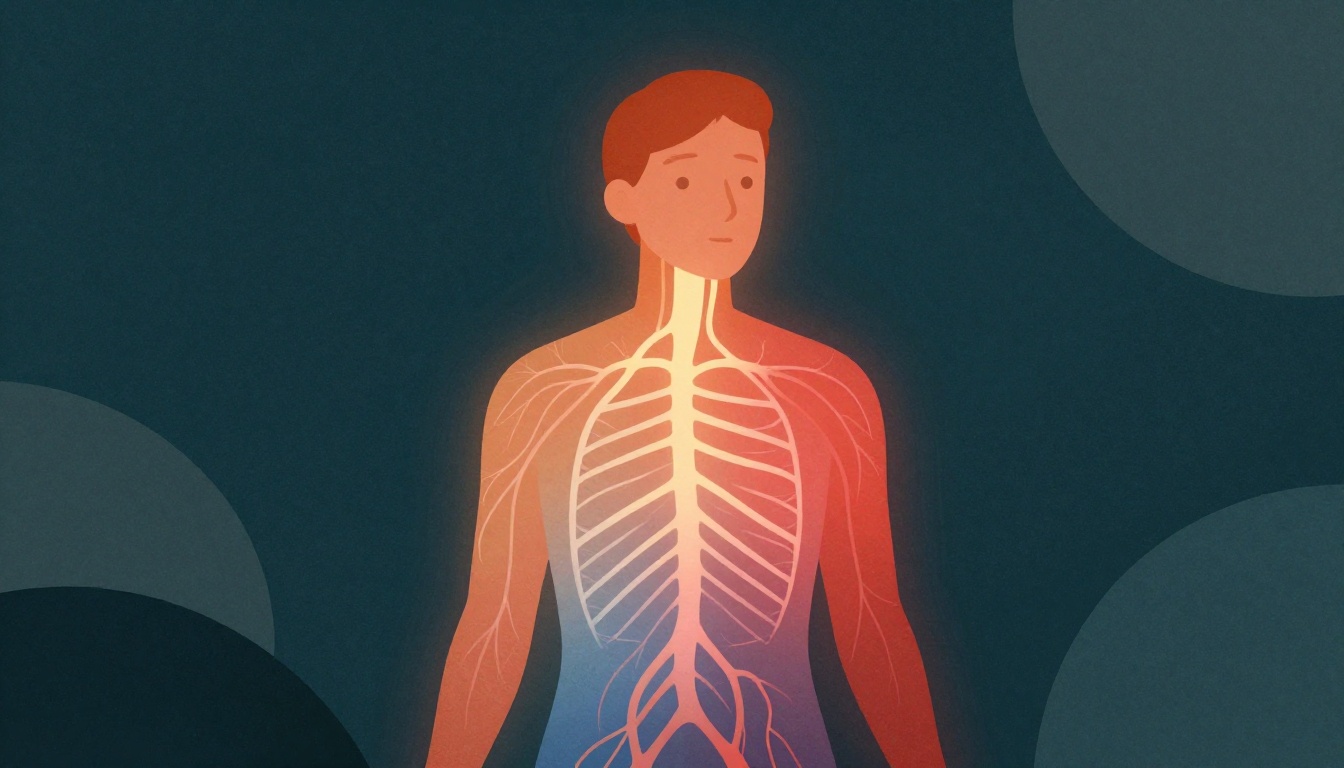
You wake up tired. Your brain feels foggy by mid-morning. Small frustrations trigger big reactions. And at night, you lie awake while your mind races.
If this sounds familiar, your nervous system may be stuck in survival mode — a state where your body keeps preparing for danger long after the threat is gone.
Survival mode isn't a diagnosis. It's a description of what happens when the autonomic nervous system stays locked in a stress response. According to Stanford Lifestyle Medicine, chronic dysregulation shows up across every system in the body — energy, sleep, digestion, mood, and immunity. Most people treat these as separate problems. They're not. They're one problem with many faces.
Here are five signs your nervous system is stuck in survival mode — and what you can actually do about each one.
What percentage of vagus nerve fibers carry sensory information from the body up to the brain?
Select one answer.
1. You're wired but exhausted
You rely on caffeine to function. You crash in the afternoon. By evening you're too tired to do anything but scroll — yet you can't fall asleep when your head hits the pillow.
This is the classic signature of a sympathetic-dominant state. Your stress response is stuck in the "on" position, but your energy reserves are depleted. The body is running on emergency fuel.
What helps: The physiological sigh — a double inhale through the nose followed by a long, slow exhale through the mouth. Research from Stanford's Huberman Lab identifies this as one of the fastest real-time downregulation tools available. It takes 30 seconds and works anywhere.
2. You feel emotionally numb or disconnected
Not everyone in survival mode feels anxious. Some people feel nothing at all.
This is the dorsal vagal response — sometimes called the freeze or shutdown state. According to Polyvagal Theory, developed by Dr. Stephen Porges, this is the nervous system's oldest survival circuit. When the brain detects no escape, it conserves energy by dimming awareness, reducing pain signals, and pulling you away from connection.
You might notice a sense of detachment from your own life, difficulty feeling joy or sadness, or a vague sense that you're going through the motions.
What helps: Gentle movement that doesn't overwhelm the system — a slow walk, stretching, or rocking. The goal isn't to "snap out of it." It's to send small safety signals to the body over time.
3. Your digestion is unpredictable
Bloating, IBS, nausea, or loss of appetite — these are not separate gut issues. They are nervous system issues.
When the body is in survival mode, blood flow is redirected away from non-essential functions like digestion. Gut motility slows. The microbiome shifts. This is why chronic stress and digestive problems so often travel together.
What helps: Eating in a calm environment without screens. Chewing slowly. Humming before meals — the vibration stimulates the vagus nerve, which runs from your brainstem to your abdomen and plays a central role in rest-and-digest functions.
4. You're reactive or irritable over small things
You snap at your partner over a minor comment. You feel rage in traffic. You cry at a commercial.
When your nervous system is already on high alert, your tolerance window shrinks. What would normally be a minor annoyance registers as a major threat. Your brain is scanning for danger — and finding it everywhere.
What helps: Completing the stress cycle physically. The body was designed to discharge stress through movement. A 10-minute walk after a hard conversation isn't optional — it's neurological hygiene. It tells your body the threat has passed.
5. You can't truly relax
You try to rest, but your body stays tense. You take a weekend off, but you don't feel restored. You fall asleep watching TV, but wake up at 3 a.m. with your heart pounding.
This is the most frustrating sign of all — because you're doing the right things, but your body isn't receiving the signal that it's safe.
The problem is often a missing transition. Going from work mode to rest mode with nothing in between gives the nervous system no cue that the day is over.
What helps: Build a deliberate end-of-day ritual. Change your clothes. Take a short walk. Do five minutes of breathwork. The nervous system learns from repetition. Give it a consistent cue that says "we're done."
How the Resident Expert Can Help
If you recognize yourself in these signs, you don't have to figure this out alone. Kelly Pienaar offers online counselling and coaching focused on nervous system regulation and trauma recovery. Her approach is grounded in both formal training and lived experience navigating complex health challenges, dysregulation, and prolonged stress. She works with individuals who feel stuck in cycles of overwhelm, helping them understand their nervous system patterns and build real, practical stability — not by pushing through, but by working with the body in a structured, body-aware way. If you're ready to move from survival mode to steadier ground, her practice is a place to start.